For any business that serves customers in a specific geographic area, whether a dental practice, a law firm, a restaurant, a contractor, or a retail store, local seo is not a supplementary marketing channel. It is the highest-ROI digital strategy available, and in 2026 it has become more competitive, more algorithm-driven, and more consequential than at any previous point in its history.
The businesses that dominate local search results are capturing customers who are already actively searching for exactly what they offer — people with immediate purchase intent who are geographically positioned to buy. This article maps the full local seo ranking framework in 2026, covering the three algorithm pillars, the factors that move rankings most, and the specific actions that produce measurable results for location-based businesses.
| 📍 Topic | 📌 Key information |
|---|---|
| 🎯 What it is | The process of optimizing a business’s online presence to appear in location-based search results |
| 🏆 Primary ranking surface | Google Maps Local Pack (the three-business box that appears above organic results) |
| 📊 Three ranking pillars | Relevance, proximity, and prominence — all three must be addressed simultaneously |
| 🏢 Foundation | Google Business Profile (GBP) accounts for approximately 32% of Local Pack ranking weight |
| ⭐ Reviews | Recency and velocity now outweigh total review count in Google’s 2026 algorithm |
| 📋 NAP consistency | Name, Address, Phone must match exactly across all directories and citations |
| 🌐 Website role | Site optimization provides supporting relevance and authority signals for GBP rankings |
| 🤖 AI search factor | Active, complete GBP profiles appear more frequently in Google AI Overview summaries |
What local seo is and how Google decides which businesses rank
Local seo is the discipline of optimizing a business’s online presence so that it appears prominently when people in a specific geographic area search for relevant products or services. Unlike broad SEO, which targets national or global audiences with content-driven authority building, local seo operates through a distinct ranking system governed by signals that are specific to location, engagement, and proximity.
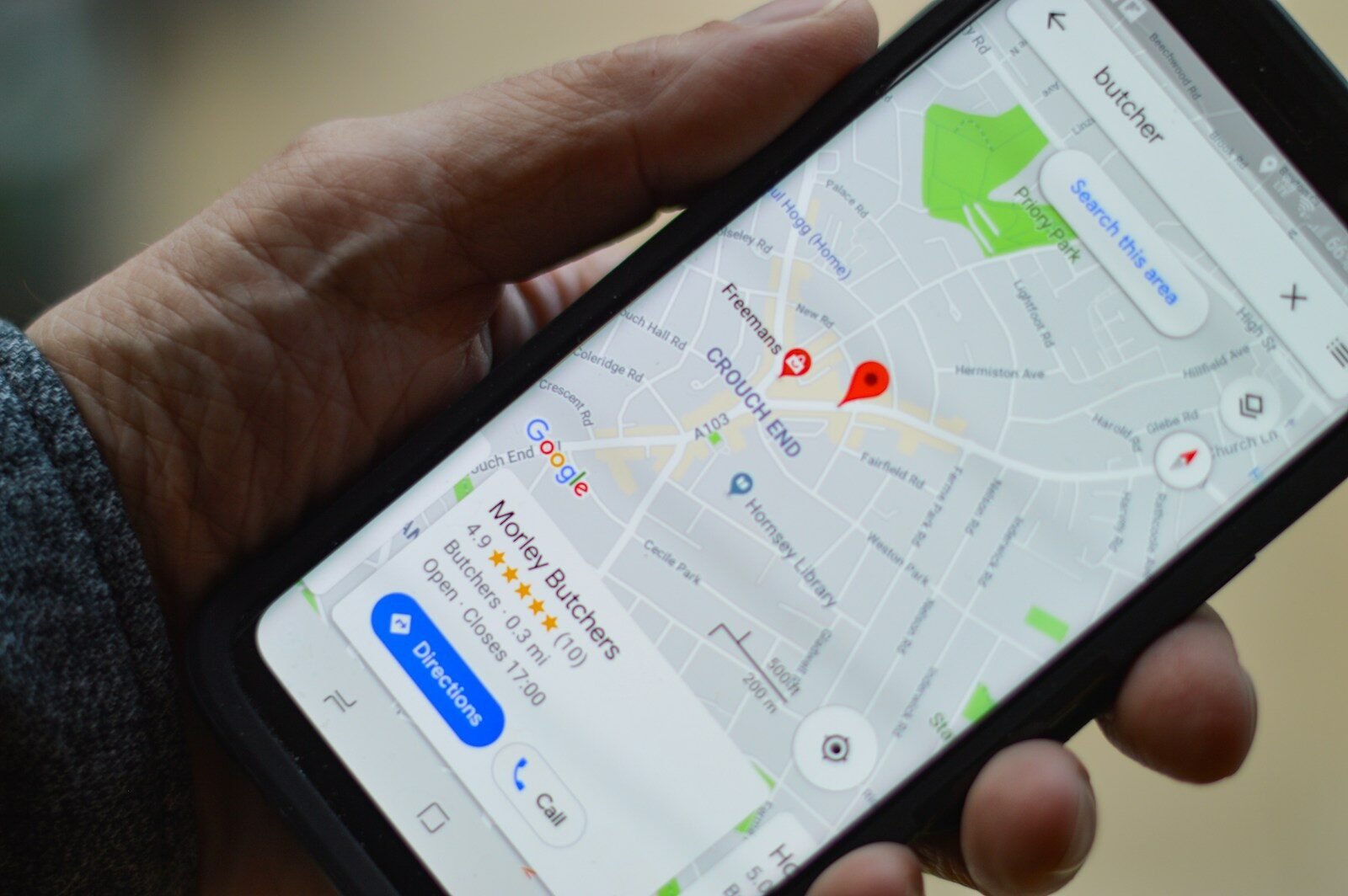
The primary ranking surface for local seo is the Google Maps Local Pack — the three-business listing that appears above traditional organic results for queries with local intent, such as “dentist near me,” “best Italian restaurant in Austin,” or “emergency plumber Dallas.” This box drives a disproportionate share of local search clicks and conversions because it appears before any organic results and includes immediate action triggers: phone call buttons, direction links, and review summaries.
Google determines which businesses appear in the Local Pack through three primary ranking pillars, confirmed in its own official documentation:
Relevance refers to how closely a business matches what a searcher is looking for. A business profile that accurately describes its services, uses correct primary and secondary categories, and includes relevant keyword-rich descriptions is more relevant to more queries. Relevance is largely within a business’s control through profile optimization and website content.
Proximity refers to how close the business is to the searcher’s location. If the searcher’s location is not explicitly stated in the query, Google infers it from device GPS, IP address, or previous search behavior. Proximity is environmental — a business cannot change its physical location — but it can maximize the geographic reach of its profile through service area settings and location-specific content.
Prominence refers to how well-known and trusted a business appears to be. It encompasses the number and quality of reviews, the volume and authority of websites linking to the business, the completeness and activity level of the Google Business Profile, and the business’s overall online presence across directories, social platforms, and industry citations. Prominence is the most controllable of the three pillars over time and is where sustained local seo investment produces the most compounding returns.
Local seo ranking factors in 2026: what actually moves the needle
The Local Pack ranking algorithm weighs dozens of signals, but the evidence from SEO practitioners working with real client data consistently identifies a smaller set of high-weight factors that produce the majority of measurable ranking movement.
Google Business Profile completeness and category selection is the single largest controllable ranking lever, accounting for approximately 32% of Local Pack algorithm weight. The gap between a claimed but incomplete profile and a fully optimized active profile is where most Local Pack rankings are won or lost. Category selection is particularly critical: the primary business category tells Google precisely which search queries to consider the business relevant for, and correcting an incorrect primary category has been documented to produce Local Pack visibility changes within weeks. Secondary categories expand visibility for related services. Every attribute, service offering, product listing, and Q&A response adds additional relevance signals that competing businesses without the same completeness cannot match.
Review recency, velocity, and response quality have shifted in their relative weighting in 2026 in a specific direction: recency and steady velocity now outweigh total review count in Google’s algorithm. A business with 200 reviews but none in the last three months now ranks below a competitor with 80 reviews arriving consistently each week. Google interprets a steady flow of new reviews as evidence that the business is active, engaged, and trusted by current customers. Responding to every review — both positive and critical — sends an engagement signal that compounds the effect of the reviews themselves. A new dental practice that built a review acquisition system into its patient checkout process went from zero to 60 verified reviews in six months and ranked first in the Local Pack against established competitors, primarily on the strength of that velocity.
NAP consistency (Name, Address, Phone number) is the foundational citation hygiene requirement. When a business’s contact information appears in conflicting formats across directories — the business name abbreviated on one platform but spelled out on another, the phone number formatted with dashes in one place and without in another — it creates trust ambiguity that Google resolves by reducing the confidence score of both listings. Consistency across the 30 to 50 most authoritative local directories produces measurable improvements in prominence signals.
| 📊 Ranking factor | 💪 Weight (approximate) | 🎯 Primary action |
|---|---|---|
| GBP completeness and categories | ~32% of Local Pack weight | Audit completeness; correct primary category; fill all fields |
| Reviews (volume, recency, velocity, keywords) | ~16% | Build acquisition system; respond to all reviews within 48 hours |
| Website local signals (on-page, content, mobile) | ~16% | Create location-specific pages; optimize title tags for local keywords |
| Behavioral signals (CTR, calls, directions) | ~10% | Optimize profile photos and descriptions to improve click-through |
| Citations and NAP consistency | ~8% | Audit and clean major directories; maintain consistent formatting |
| Local link authority | ~8% | Acquire links from local news, chambers of commerce, industry directories |
| GBP activity (posts, photos, Q&A) | ~6% | Publish weekly posts; add new photos monthly; populate Q&A |
How your website supports local seo performance ?
A common misconception among small business owners is that a strong Google Business Profile alone is sufficient for Local Pack rankings without investing in website optimization. The reality in 2026 is that website signals provide the supporting relevance and authority context that GBP cannot supply on its own.
Google analyzes the linked website as a relevance confirmation signal: does the website’s content corroborate what the GBP claims about the business’s services, location, and expertise? A well-optimized GBP pointing to a website with thin content, no local keyword signals, poor mobile performance, or slow load times creates a credibility gap that competitors with stronger websites exploit.
The most impactful website elements for local seo support are:
- Location-specific pages for businesses serving multiple cities or neighborhoods, each containing unique content addressing the specific location rather than duplicated templates with city names swapped
- On-page local keyword integration in title tags, H1 headings, and body content — not through keyword stuffing, but through natural language that reflects how local customers describe the service and location
- Mobile performance measured by Core Web Vitals, since the majority of local searches occur on mobile devices and Google applies mobile-first indexation standards to ranking decisions
- Structured data markup (LocalBusiness schema) that explicitly communicates the business’s name, address, phone number, hours, and service categories in machine-readable format
Technical health remains a prerequisite for everything else in a local seo strategy. Structural issues including broken internal links, crawl errors, duplicate content between location pages, and missing canonical tags prevent search engines from accurately indexing and evaluating the pages that are meant to support local rankings. A technical audit conducted before investing in content or citation building is consistently the most efficient use of early-stage local seo budget.
ALSO READ : Buy permanent backlinks: what they are, why they matter, and how to get them right
Local seo in the age of AI search: the 2026 dimension
One development that has meaningfully changed local seo practice in 2026 is the growing role of AI-generated summaries in local search results. Google’s AI Overviews now appear for more than 30% of all searches, and for local queries, these summaries draw information from Google Business Profiles, review text, and published local content.
The practical implication is that businesses with active, complete, and information-rich GBP profiles appear more frequently in AI-generated local summaries than businesses with static or incomplete profiles. Google’s AI systems pull from the most complete and recently updated data available when constructing these summaries. A business that treats its GBP as a living marketing asset — updating hours seasonally, posting weekly content updates, adding new service listings as they become available, responding to reviews with keyword-rich text — provides the data density that AI systems favor when generating recommendations.
Voice search, which has increased significantly in usage for local queries in 2026, adds another dimension to profile completeness. Queries like “find a plumber near me” or “what are the hours of the nearest pharmacy” resolve directly from GBP data. A profile with complete hours, accurate address, and detailed service descriptions is the correct resolution for these queries; an incomplete profile is skipped in favor of a more data-rich competitor.
Building a local seo strategy that produces compounding results
The businesses that consistently win local search results in competitive markets are not the ones implementing the most tactics simultaneously — they are the ones executing the highest-weight factors with greater quality and consistency than their direct competitors.
A practical local seo roadmap that reflects the current ranking factor distribution starts with the Google Business Profile. No other action produces a higher return in the first 30 to 90 days. Completing the profile fully, correcting the primary category, filling in all service listings and attributes, adding high-quality photos, and establishing a weekly posting cadence are the actions that create immediate visibility improvements. The review acquisition system comes next: building a frictionless request process into existing customer workflows (post-service email, SMS follow-up, in-person QR code at checkout) generates the steady review velocity that the 2026 algorithm rewards.
Citation cleanup and NAP consistency audit follows, addressing the major directories (Google, Yelp, Bing Places, Apple Maps, Facebook, and 20 to 30 industry-specific directories) to eliminate the conflicting information that depresses prominence scores.
Website local optimization — location-specific pages, title tag updates, LocalBusiness schema implementation, and Core Web Vitals improvements — produces the supporting authority signals that sustain and strengthen rankings as GBP and review strength accumulates.
Local link building through community partnerships, local press mentions, chamber of commerce listings, and industry association directories provides the external authority signals that complete a full local seo presence. None of these steps are shortcuts. Together, they build a competitive local search presence that generates a continuous flow of high-intent, geographically relevant customers — the most commercially valuable form of organic search traffic available to any location-based business.