No figure in American political history has combined executive power over financial regulation with direct personal financial stakes in the industry being regulated quite like the current president has done with cryptocurrency. Trump cryptocurrency is not a single product or a simple investment position — it is an ecosystem of tokens, ventures, and policy decisions that have generated billions of dollars in paper wealth for the Trump family while simultaneously reshaping the regulatory environment for the entire digital asset industry.
In 2026, the scope of that involvement has expanded, attracted Congressional investigations, and produced market movements that make the intersection of presidential power and crypto markets one of the most consequential stories in finance. This article maps the full picture.
| 🪙 Topic | 📌 Key information |
|---|---|
| 💼 TRUMP meme coin | Launched January 2025 on Solana; at-low near $1.31; currently ~$10.38; $652M market cap |
| 🏦 World Liberty Financial (WLFI) | DeFi/governance token; co-founded by Trump and sons; raised $750M; generated $550M via token sales |
| 💵 USD1 stablecoin | Issued by WLFI; over $2.7 billion worth sold; pegged to USD |
| 📈 Trump family crypto wealth | Combined crypto assets exceed $1 billion; WLFI alone produced $57.3M in 2024 income for Trump |
| 🏛️ Policy role | GENIUS Act signed July 2025; CLARITY Act pending Senate; Bitcoin Strategic Reserve created |
| 🔍 Congressional investigation | April 8, 2026: Senators Warren, Schiff, Blumenthal opened formal inquiry into TRUMP token access model |
| 📉 WLFI token status | Down 76% from September 2025 peak ($0.33 → $0.077); 62.3B tokens proposed to unlock |
| 🌐 Conflict of interest concern | President regulates industry in which he holds significant personal financial positions |
The trump cryptocurrency empire: TRUMP token, WLFI, and $MELANIA explained
The trump cryptocurrency portfolio spans three primary assets, each with a distinct structure, investor base, and market history. Understanding all three is essential to understanding both the financial scale and the political controversy.
The TRUMP meme coin was launched on the Solana blockchain in January 2025, shortly before President Trump’s second inauguration. It was the first directly president-branded cryptocurrency in American history and generated immediate and extraordinary market activity: the two meme coins, $TRUMP and $MELANIA (launched shortly after), generated over $427 million in trading volume and fees within their first days of operation. The TRUMP token reached a high of approximately $73 before declining sharply, and by April 2026 it was trading near $2.80 with a market cap of approximately $652 million. As of May 2026, prices have recovered to the $10.38 range. The current price remains near its all-time low of $1.31, a reflection of the Congressional investigation pressure and broader meme coin market dynamics.
The TRUMP token’s most controversial feature is its token lock event model, which has become the focus of the Congressional investigation launched on April 8, 2026. Under this mechanism, the top 297 TRUMP token holders were eligible to attend a meeting at Mar-a-Lago, with the top 29 receiving VIP access to meet the president in person. Senators Elizabeth Warren, Adam Schiff, and Richard Blumenthal formally contacted Fight Fight Fight LLC, the entity behind the token, demanding documentation of this access model and all communications related to the April 25 meeting — arguing that the mechanism effectively sells presidential access for financial consideration, bypassing conventional campaign finance and conflict-of-interest frameworks.
World Liberty Financial (WLFI) is the more structurally significant and financially substantial of the trump cryptocurrency ventures. It is a decentralized finance platform co-founded by Donald Trump, his sons Donald Trump Jr., Eric Trump, and Barron Trump, with the president designated as “Co-Founder Emeritus.” WLFI raised $750 million through its token sale and generated approximately $550 million in revenue through governance token sales. In the fiscal year 2024, President Trump personally disclosed $57.3 million in income from WLFI. The Trump family holds approximately 25% of all WLFI tokens, and when the platform went to open trading, the family’s holdings briefly swelled by $5 to $6 billion in paper value.
WLFI’s native governance token experienced one of the more dramatic price collapses in the 2025 to 2026 cycle, falling 76% from its September 2025 peak of $0.33 to approximately $0.077 by April 2026. This decline partly triggered a controversial governance proposal: in April 2026, WLFI proposed unlocking 62.3 billion previously locked tokens, with early supporters holding 17 billion tokens subject to a two-year cliff followed by a two-year linear vesting period, and founders and team members seeing 10% of their 45.2 billion allocation burned while the remaining tokens begin unlocking over five years.
The USD1 stablecoin is WLFI’s third major product and arguably its most commercially significant. Pegged to the U.S. dollar and backed by short-term U.S. Treasury securities, USD1 generated over $2.7 billion in sales, making it one of the fastest-growing stablecoins in the market during its launch period. The stablecoin’s rapid adoption raised additional conflict-of-interest concerns: as the GENIUS Act passed and stablecoin regulation was formally established, WLFI’s USD1 was already positioned to benefit from the regulatory framework the president signed into law.
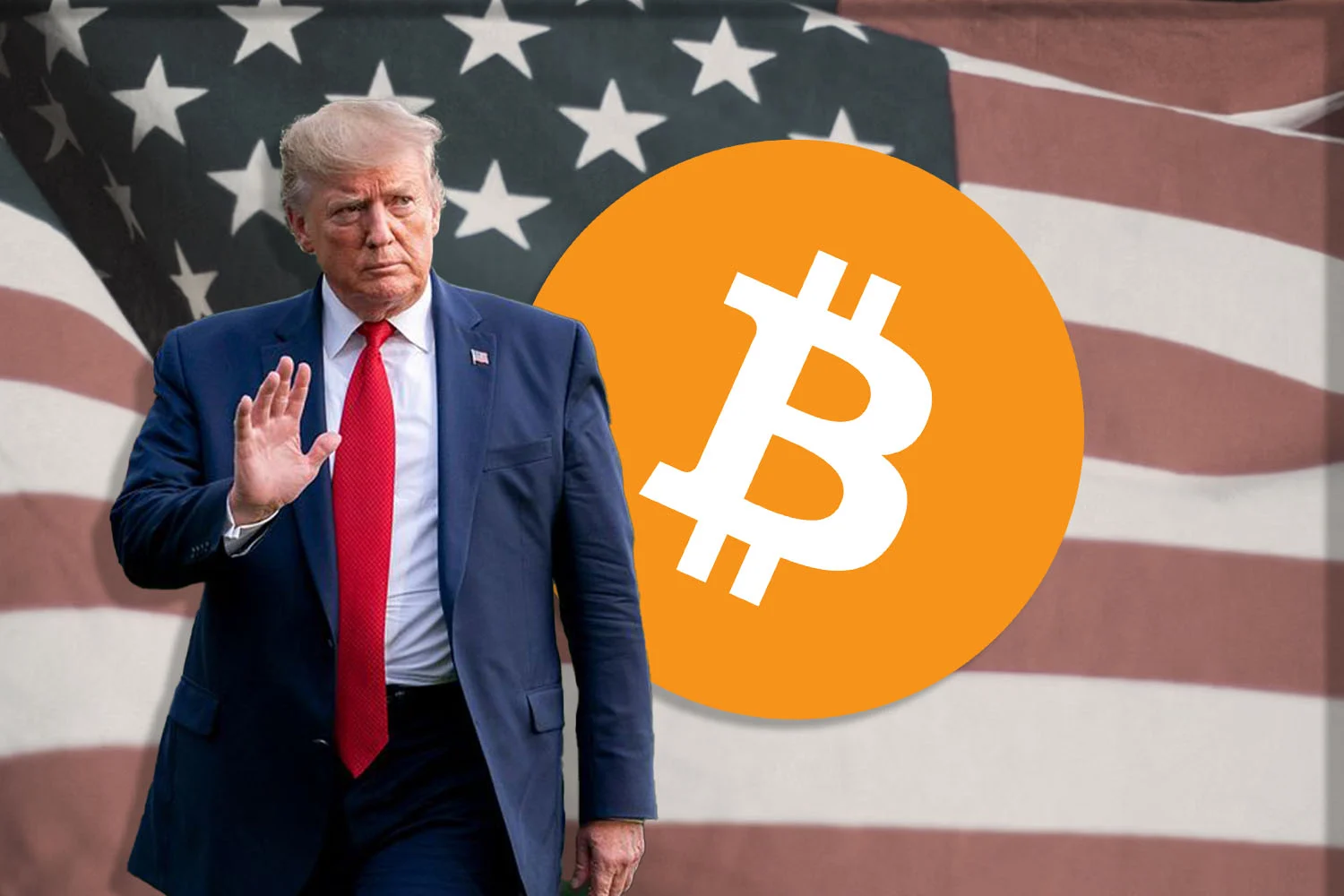
Trump cryptocurrency policy: how executive power transformed the regulatory landscape
The trump cryptocurrency connection is not limited to personal financial holdings. The administration’s policy posture toward digital assets has produced the most favorable regulatory environment in U.S. history for the cryptocurrency industry — and that environment has been built while the president holds direct financial interests in the sector being regulated.
Upon taking office in January 2025, President Trump moved quickly to reshape the regulatory landscape through a combination of executive orders, personnel changes, and legislative priorities. The SEC under the previous administration had pursued an aggressive enforcement approach toward cryptocurrency companies. The new SEC leadership, under Commissioner Paul Atkins, shifted the agency’s posture from enforcement to accommodation, dropping multiple ongoing enforcement actions and signaling a willingness to provide regulatory clarity rather than punitive oversight.
The Bitcoin Strategic Reserve, created by executive order in early 2025, established a federal holding of Bitcoin as a national reserve asset — a policy position no previous administration had taken and one that directly elevated Bitcoin’s institutional legitimacy. This decision was paired with a White House Crypto Summit in March 2025, where Trump outlined his vision for making the United States the dominant force in global digital asset markets.
The legislative achievements have been equally significant:
- The GENIUS Act, signed into law in July 2025, established the first federal regulatory framework for payment stablecoins, requiring 1:1 asset backing, monthly reporting, and a licensing pathway through the OCC — a framework that WLFI’s USD1 stablecoin was immediately positioned to operate within
- The CLARITY Act, which passed the House with a 294-vote bipartisan majority in July 2025 and is awaiting Senate action as of May 2026, would establish a comprehensive framework distinguishing SEC from CFTC jurisdiction over digital assets based on their degree of decentralization
- Trump Media and Technology Group (TMTG), in which the president holds 53% of shares, has shifted its strategic direction toward digital assets in 2026, raising funds for token purchases and Bitcoin investment products after reporting a $401 million loss in 2024
| 📋 Policy action | 📅 Date | 🎯 Significance |
|---|---|---|
| Bitcoin Strategic Reserve | Early 2025 | First federal Bitcoin holding as national reserve asset |
| SEC leadership change | January 2025 | Shifted from enforcement to accommodation posture |
| White House Crypto Summit | March 2025 | Set agenda for pro-crypto regulatory framework |
| GENIUS Act signed | July 2025 | First U.S. federal stablecoin regulation — WLFI USD1 beneficiary |
| CLARITY Act passes House | July 2025 | Comprehensive digital asset market structure; Senate pending |
| Congressional TRUMP token investigation | April 2026 | Formal Senate inquiry into pay-for-access model |
The conflict of interest debate and what it means for the market
The central question around trump cryptocurrency in 2026 is not whether the president’s financial interests have influenced his policy positions — that remains contested and under investigation — but whether the combination of those interests creates risks and distortions for ordinary investors in the crypto market.
The argument that it does rests on several observable dynamics:
- Regulatory decisions benefit directly-held assets: the GENIUS Act’s stablecoin framework created favorable conditions for USD1; the general pro-crypto regulatory environment has supported token valuations including WLFI and TRUMP
- Policy announcements move prices: Bitcoin’s price movements have been directly correlated with Trump administration announcements on Bitcoin reserves, tariff policy, and crypto legislation, giving insiders with advance knowledge of those announcements a structural advantage
- Token access events blur political and commercial spheres: the Mar-a-Lago meeting for top TRUMP token holders directly monetizes presidential access in a way that existing campaign finance and ethics laws were not designed to address
The counterargument, made by supporters of the administration’s crypto agenda, is that the United States’ competitive position in global digital asset markets required a decisive regulatory shift that no previous administration was willing to make. From this perspective, the policy actions taken serve the industry broadly — not simply Trump family holdings — and the resulting economic activity justifies the approach.
The Congressional investigation launched in April 2026 is the first formal mechanism through which these questions are being examined under subpoena power rather than through editorial commentary. Whether it produces legal consequences, regulatory changes, or simply a political record depends on developments in the Senate over the coming months.
For cryptocurrency investors, the practical implications of the trump cryptocurrency phenomenon are specific and actionable:
- TRUMP and WLFI tokens carry political risk: both assets are directly tied to the political fortunes and legal exposure of a single family; Congressional investigations, legal proceedings, or changes in political context can move prices independently of broader market conditions
- U.S. regulatory clarity is genuinely advancing: regardless of the conflict-of-interest debate, the GENIUS Act and pending CLARITY Act represent meaningful improvements in the legal framework for operating crypto businesses in the United States
- Stablecoin growth continues: USD1 and the broader WLFI infrastructure are part of a stablecoin market that grew 49% in 2025; the regulatory framework now supports continued institutional adoption of stablecoins as payment infrastructure
ALSO READ : Crypto bill: what the CLARITY Act means for your digital assets right now